
Best Filming Locations in Arizona for Video Production
I have filmed across six continents. Iraq, Austria, Australia, Japan, Columbia, Egypt and many others. And I keep coming back to Arizona as one of the most underrated production environments in the world.
Not because it is cheap. Not because it is easy. Because it is genuinely diverse in ways that most people do not realize. It supports the saying “hidden gem” well. Within a two-hour drive of Phoenix you can have red rock canyons, 3 Ski and Snowboard resorts, dense pine forest, urban downtown environments, open desert, golf courses, lakes, and ranch land. That range does not exist in many places, unless you want to pat a pretty penny.
Here is where I actually shoot and why.
Downtown Phoenix
The core of the entire Phoenix metro has changed drastically in the last five years. Mill Avenue in Tempe, the Roosevelt Row arts district, Old Town Scottsdale, and downtown Phoenix all offer strong visual environments for commercial work, interviews, and branded content.
What works well here: street-level branded content, talent-driven commercial spots, architectural backgrounds for interviews, evening shoots with city lighting with skyscrapers in the background. The desert light at golden hour in an urban environment hits differently than most cities because the low humidity keeps the sky clean and the light stays warm longer.
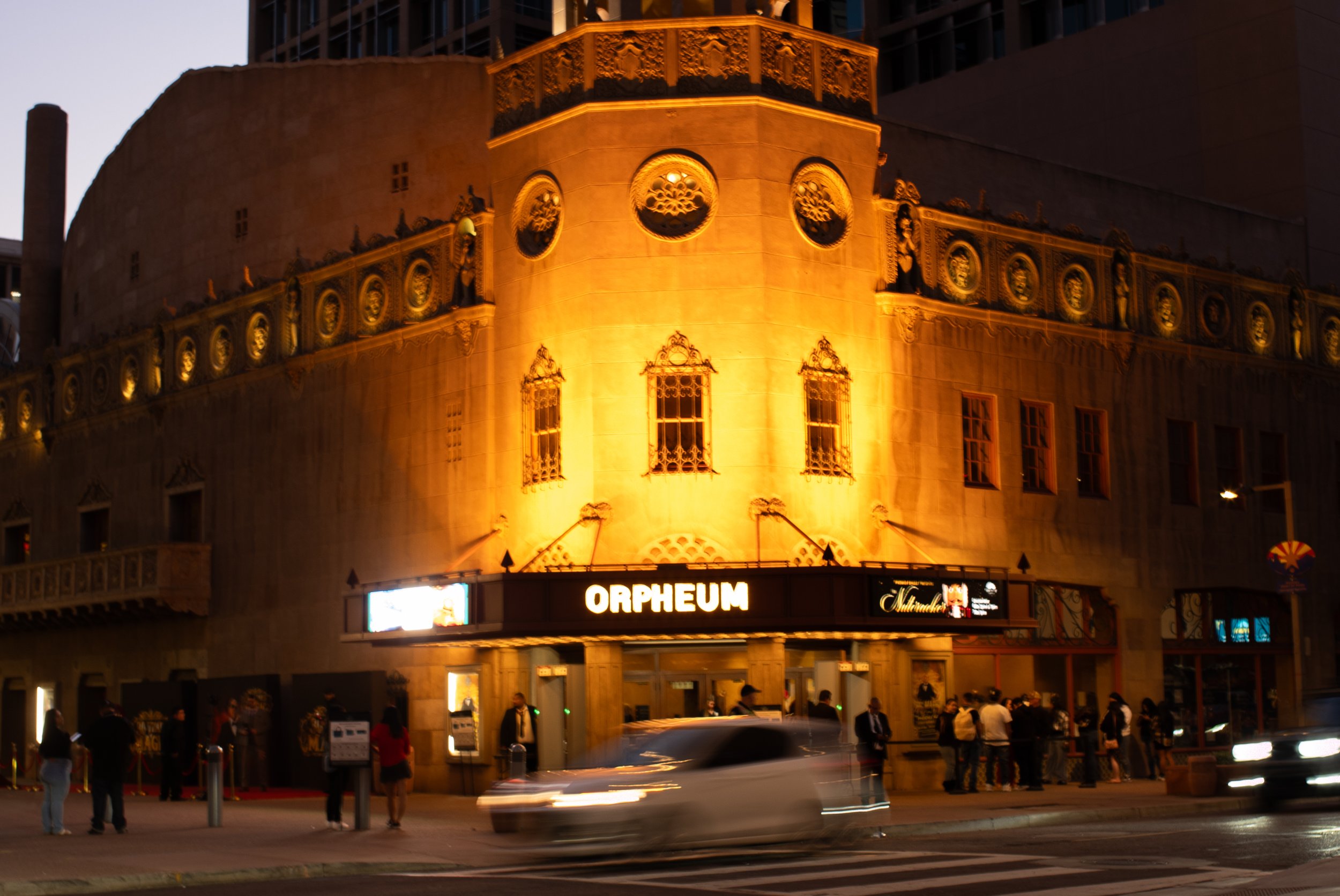
Downtown includes beautiful theatres like the Orpheum, The Van Buren, the Herberger Theater Center and many others. Ontop of the performance centers, there are stadium locations such as the Mortgage Matchup center home of the Suns and Phoenix Mercury and the notorious Chase field, home of the Diamondbacks.
Permits for downtown Phoenix shoots are handled through the City of Phoenix Film Office. Scottsdale has its own permitting process. Both are straightforward compared to shooting in Los Angeles or New York.
Best for: commercial production, branded content, interviews, social content, event coverage.
Old Town Scottsdale
Old Town Scottsdale is a different environment entirely and about 20 minutes east of downtown Phoenix. Where downtown Phoenix reads modern and industrial, Old Town gives you a western-influenced aesthetic with upscale retail, gallery row, outdoor dining, and the kind of walkable street environment that photographs well at any time of day.
The Scottsdale waterfront, the arts district, and the surrounding resort corridor add options that downtown Phoenix does not have. If you are shooting brand work for a luxury client, hospitality brand, or lifestyle product, Old Town Scottsdale is where you want to be.
Scottsdale has its own film office and permitting process separate from Phoenix. Turnaround on permits is generally fast and the city is accustomed to working with productions given how much commercial and branded content gets shot here.
Best for: luxury brand content, hospitality and resort work, lifestyle commercial, fashion, interview setups with upscale architectural backgrounds.
Camelback Mountain and the Paradise Valley Estates
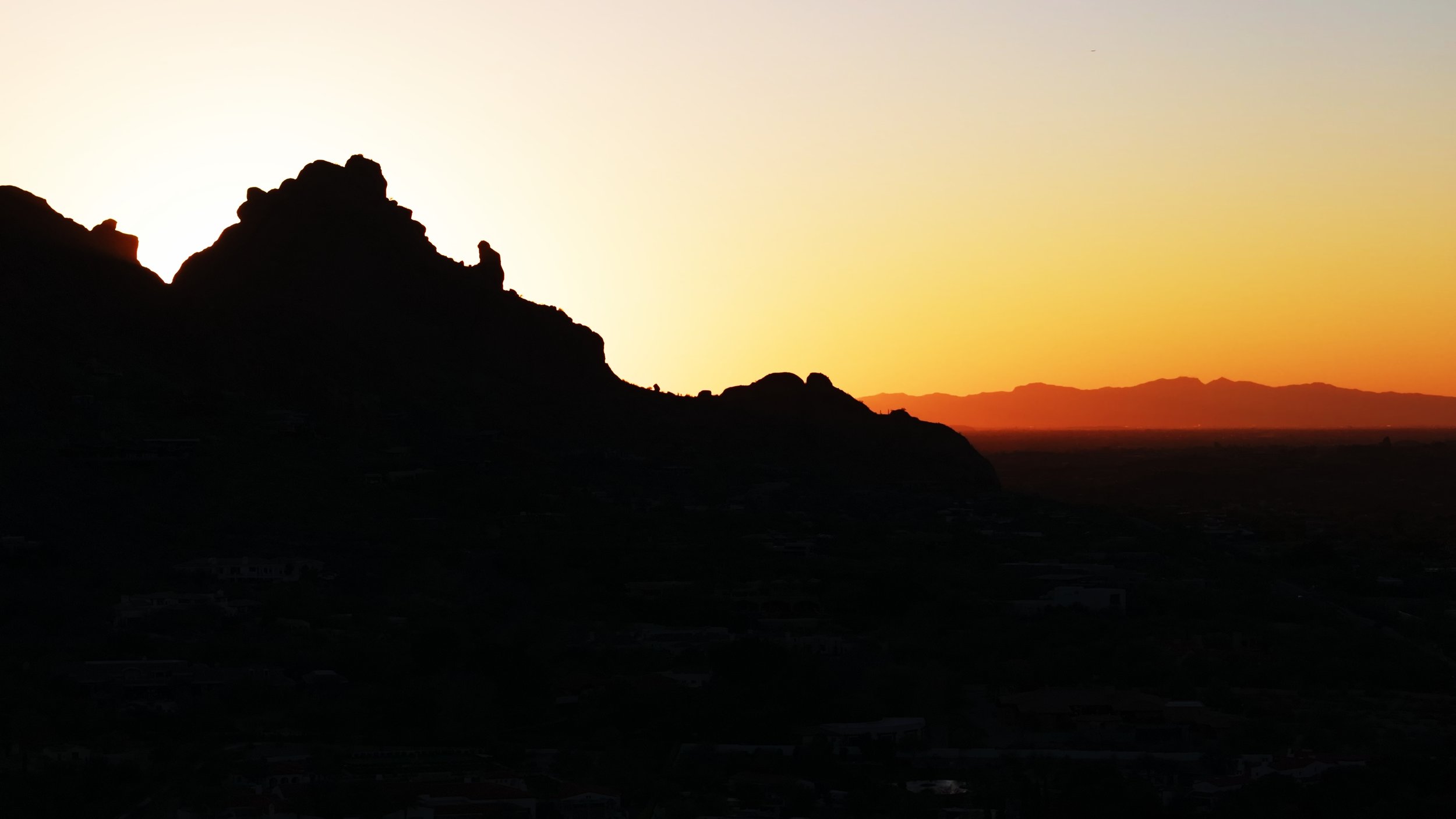
Camelback Mountain is one of the most recognized landmarks in the entire Valley. The profile of the mountain is immediately readable as Phoenix on screen in a way that very few other locations are. You do not need to explain where you are when Camelback is in the background.
What most productions do not realize is that some of the private homes and estates in Paradise Valley and the Arcadia neighborhood have direct sightlines to Camelback from their properties. These are legitimately stunning settings. Floor-to-ceiling glass, infinity pools, desert landscaping, and Camelback Mountain filling the background. For luxury brand work, real estate content, lifestyle shoots, and high-end commercial production this kind of location is difficult to replicate anywhere else in the country.
Accessing these properties typically goes through location scouts or short-term rental platforms that cater to production use. Some homeowners in Paradise Valley actively rent to productions and understand what a shoot day involves. The per-day rates are higher than a standard permit location but the visual return is significant.
Camelback Mountain itself is a City of Scottsdale park. Commercial filming on the mountain requires a permit and there are restrictions on drone operations given the residential areas surrounding it. The summit and trail sections can be used for documentary and lifestyle work with proper permits in place.
Best for: luxury brand content, real estate and architecture video, lifestyle commercial, executive interviews with landmark background, high-end hospitality and resort work
Eloy, Arizona - Skydive Arizona
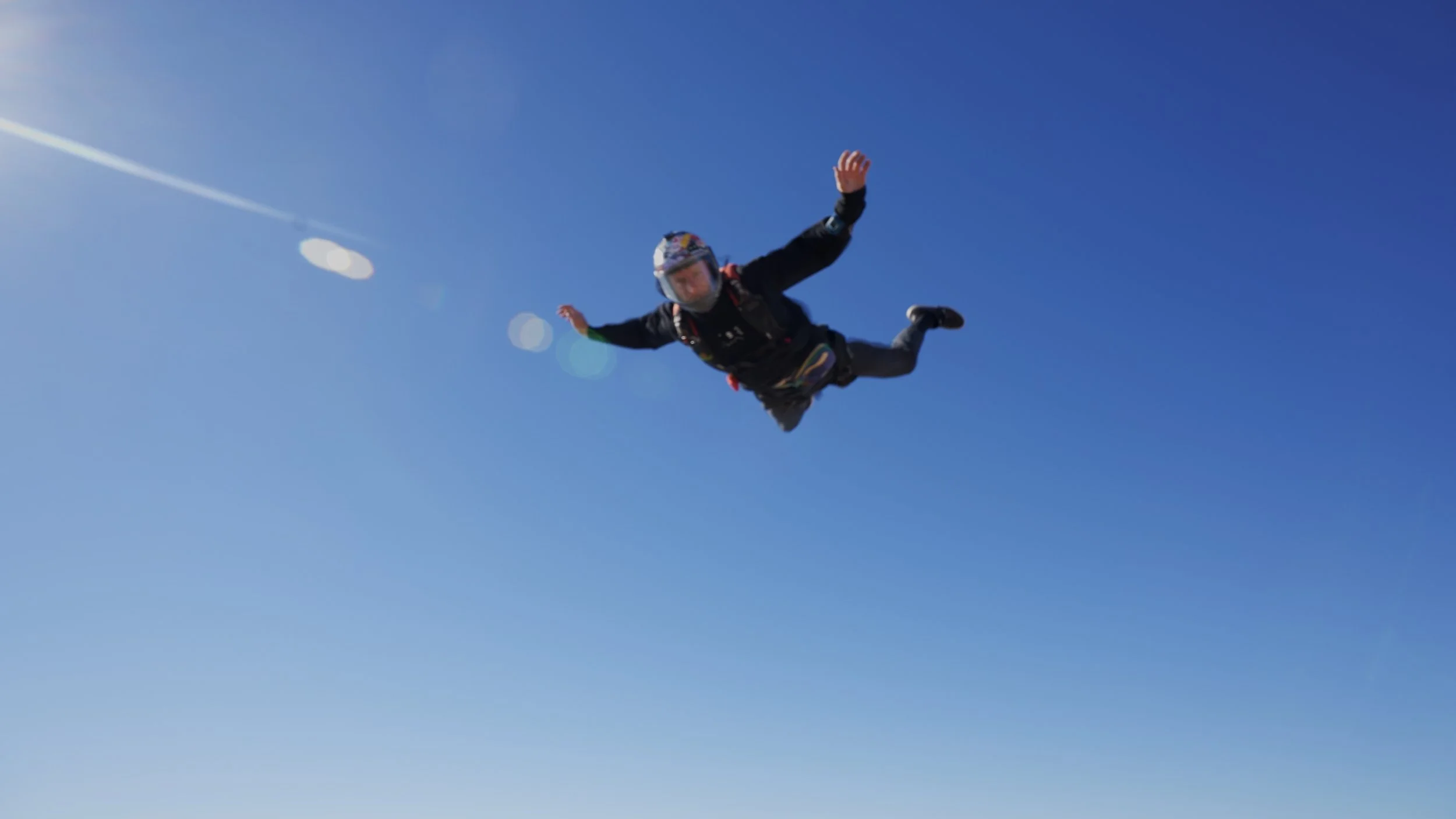
About an hour south of Phoenix sits Eloy, Arizona, home to Skydive Arizona - the largest skydiving dropzone on earth. The facility handles thousands of jumps per day at peak season and draws professional skydivers, base jumpers, and wingsuit flyers from around the world year-round.
For action sports production, commercial work, and any content that needs aerial human performance at the highest level, there is no better facility in the world to work with. The volume of talent passing through Skydive Arizona on any given day is unmatched. World champions, military freefall teams, professional canopy pilots, and formation skydiving world record holders all use this facility as their home base.
We shot the SpinQuest commercial here. The concept required filming actual skydiving ads in freefall and having a director who understood the environment made the difference between a production that executed cleanly and one that would have struggled. The open desert around Eloy gives you clean horizon lines and the altitude means you have genuine scale on every aerial shot.
The controlled environment of a professional dropzone also means production logistics are more manageable than they might seem. Jump timing is coordinated with the facility, camera positions can be planned around jump runs, and the ground crew infrastructure is already in place.
Beyond skydiving, the Eloy area and the surrounding Sonoran Desert terrain give you open desert shooting environments with very little interference. The combination of the dropzone facility and the surrounding landscape makes Eloy a genuinely unique production destination.
Best for: action sports production, skydiving and aerial content, commercial work needing freefall footage, documentary coverage of extreme sports, any production that needs access to the world's top aerial athletes in a controlled environment.
Mesa, Arizona and Revel Surf Park
Mesa sits directly east of Phoenix and Scottsdale and is the third largest city in Arizona. It gets overlooked as a production location because it does not have the brand recognition of Scottsdale or the downtown character of Phoenix, but it has its own distinct environments worth knowing about.
The Mesa Arts Center gives you a contemporary architecture backdrop in the heart of the city. The historic downtown area along Main Street has a different character from Old Town Scottsdale. The Superstition Freeway corridor has industrial and commercial environments that work well for certain commercial productions.
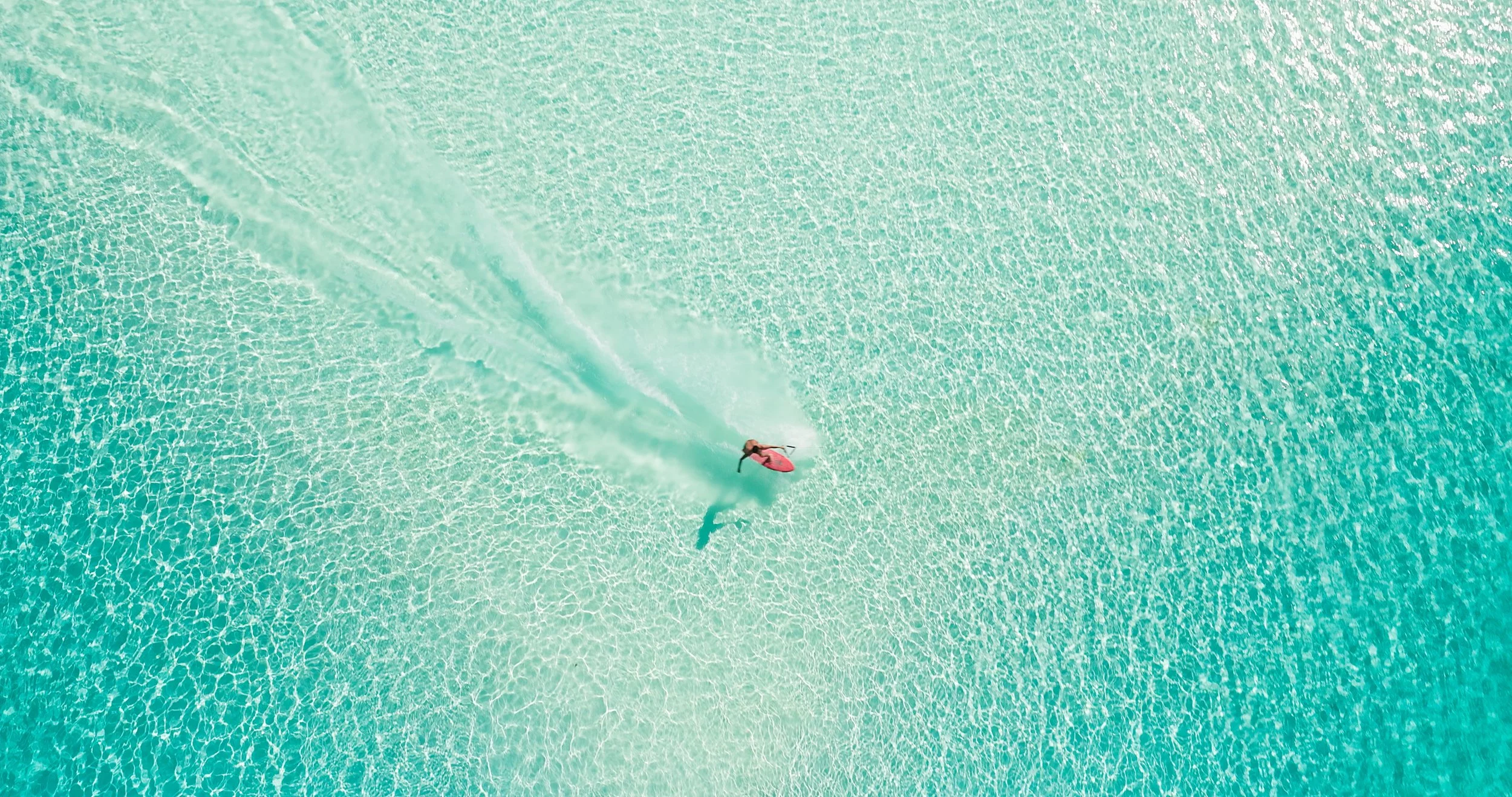
But the most interesting production location in Mesa right now is Revel Surf Park. Revel is one of the few surf wave pools in the United States and it creates a genuinely unusual visual environment. A fully operational surf break in the middle of the Arizona desert. We covered the Revel Rukus event there and the combination of athletes on world-class waves, the pool environment, and the surrounding desert context gave us material that would be impossible to replicate at a traditional surf location.
For action sports brands, lifestyle content, energy drink campaigns, athletic apparel, and any production that wants the visual language of surf culture without the logistical complexity of shooting at an ocean location, Revel Surf Park is worth serious consideration. The facility is set up to handle events and has experience working with production crews.
Commercial shoots at Revel require coordination directly with the facility. The controlled environment means you can plan shots with a precision that open ocean locations do not allow.
Best for: action sports production, surf brand content, lifestyle and athletic commercial work, event coverage, any production that needs a visually unexpected environment.
The Sonoran Desert
The open Sonoran Desert around Phoenix, Tucson, and the areas west toward Wickenburg and east toward Florence gives you classic Arizona desert visuals. Saguaro cactus, open sky, dry washes, and the kind of terrain that reads immediately as American Southwest on screen.
For action sports and motorsports production this environment is hard to beat. We have shot off-road content, FPV drone sequences, and vehicle work in desert locations around the Valley. The terrain handles fast-moving subjects well and the open sky means you are not fighting light from multiple directions.
Public desert land managed by BLM or Arizona State Land Department requires permits for commercial shoots. Private desert property can often be accessed through landowner agreements. If you are shooting on desert land without a permit and you get checked, the fines are significant.
Best for: action sports, motorsports, off-road vehicle content, drone cinematography, documentary backgrounds.
Papago Park and the Red Buttes
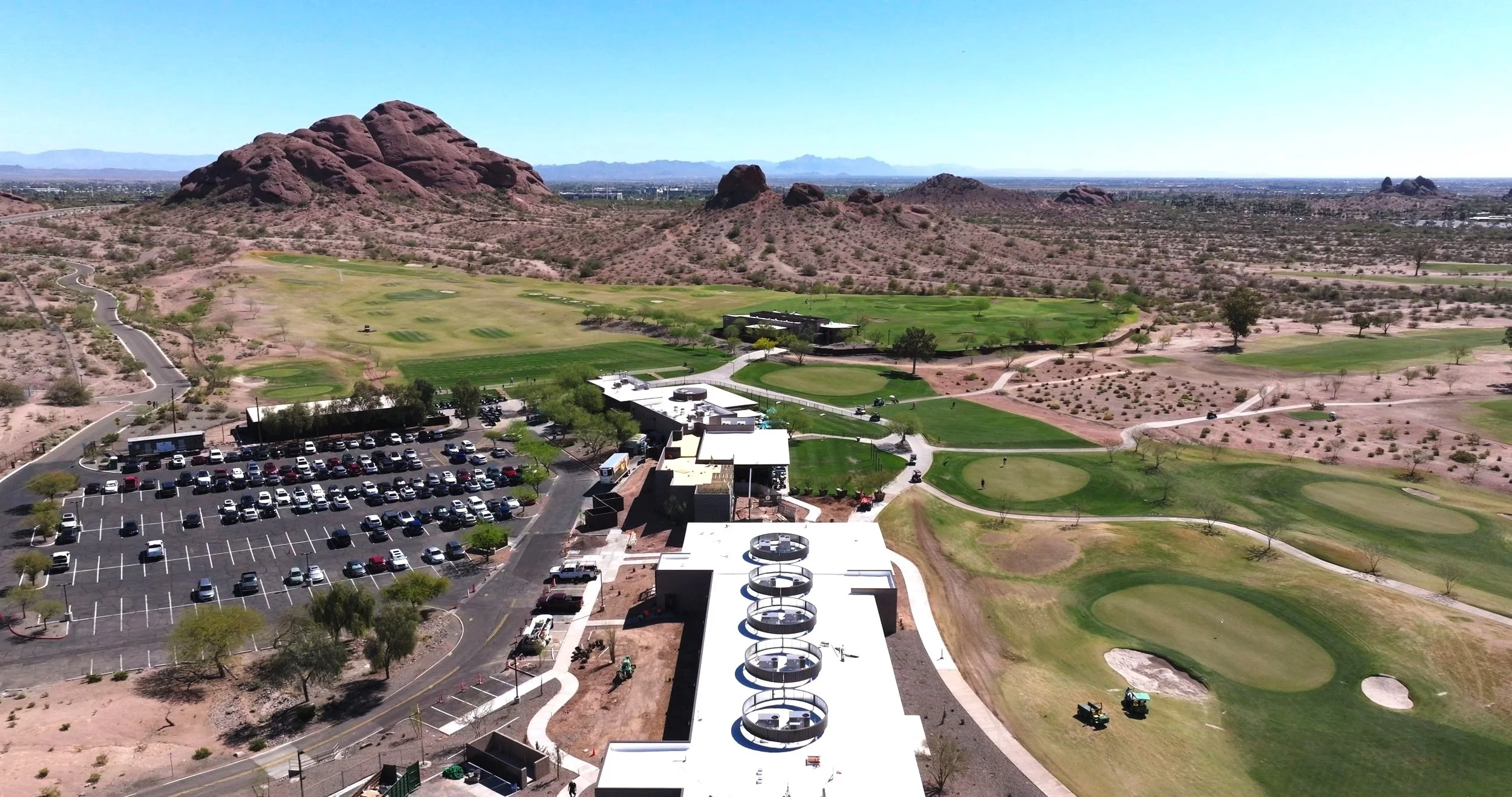
Papago Park sits right in the middle of the metro and gives you immediate access to the red sandstone butte formations that define the east Valley landscape. We shot the Papago Golf Course overview here and the combination of desert terrain, the buttes in the background, and the course design gave us something visually distinctive without driving two hours out of the city.
The park itself is public land managed by the City of Phoenix. Permits are required for commercial shoots and drone operations. The Arizona Film Commission can point you toward the right contacts.
What makes Papago useful is proximity. You can be shooting downtown in the morning and have completely different visual vocabulary by noon just by driving east.
Best for: aerial cinematography, location B-roll, documentary backgrounds, golf and outdoor recreation content..
Sedona
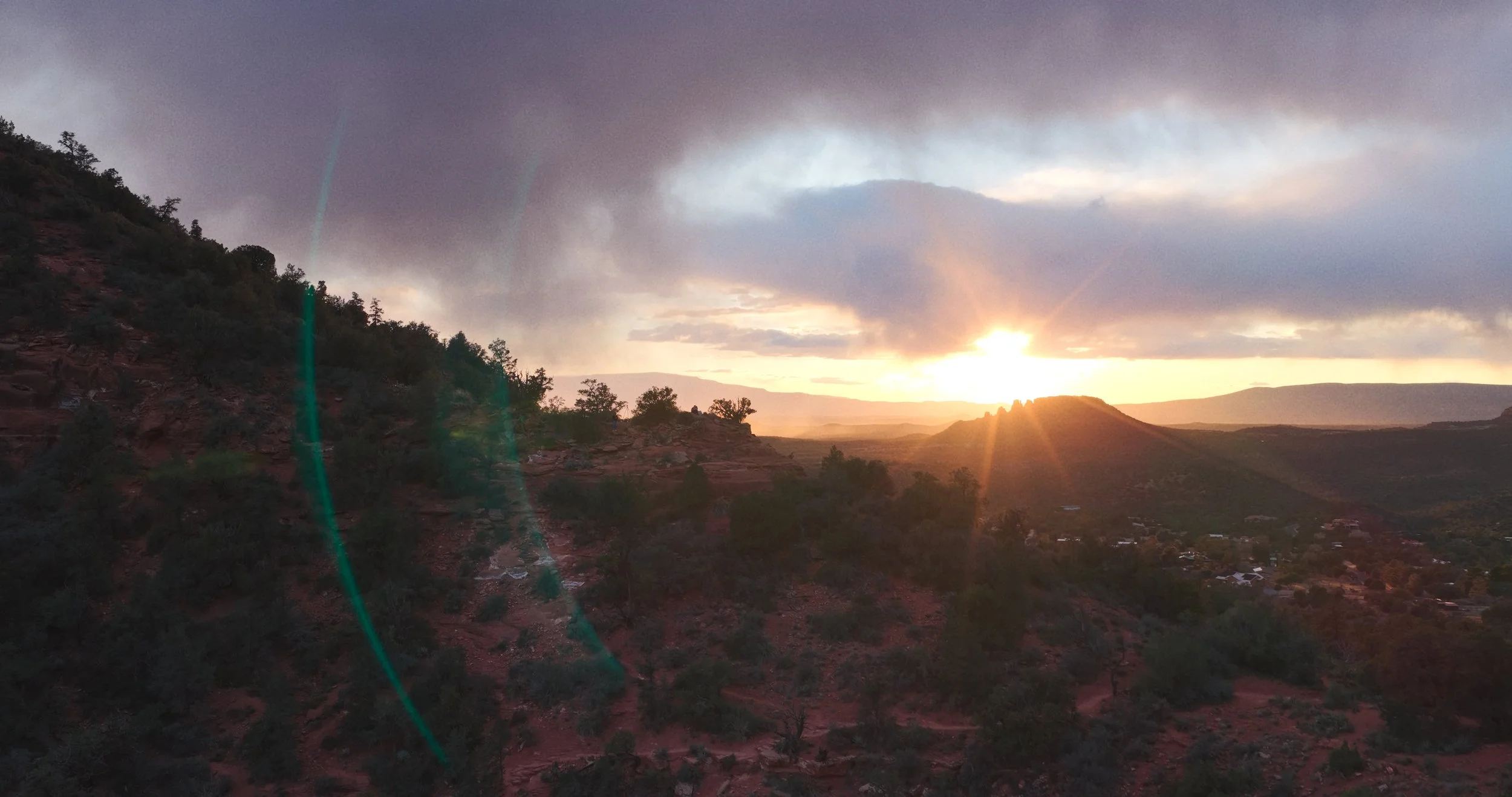
Sedona deserves its own section because nothing else in Arizona looks like it. The red rock formations around Cathedral Rock, Bell Rock, and Courthouse Butte are genuinely cinematic. There is a reason major productions keep coming back here.
The challenge with Sedona is permits. Coconino National Forest requires permits for commercial shoots on federal land and they enforce it. The City of Sedona has its own requirements for shoots within city limits. Build permit lead time into your production schedule because it is not a same-week conversation.
Drone operations in Sedona require FAA authorization in some areas due to proximity to Sedona Airport. Part 107 certification is required for commercial drone work anywhere in Arizona.
What Sedona offers that nothing else in the state matches: scale. The rock formations are massive and the light on them changes dramatically throughout the day. Morning shoots with fog sitting in the canyons are especially strong. If you have one day to show a client what Arizona looks like at its most dramatic, you bring them to Sedona.
Best for: high-production documentary, branded documentary backgrounds, commercial spots needing dramatic landscape, narrative productions, destination brand work.
Mt. Lemmon and the Santa Catalinas
Mt. Lemmon sits above Tucson and is one of the most remarkable natural transitions in the state. Drive from the Sonoran Desert floor at the base to the summit at 9,157 feet and you pass through five distinct climate zones in a single mountain. Cactus and desert scrub give way to oak woodland, then pine forest, then mixed conifer, then spruce and fir near the top. The visual transformation is dramatic and it happens fast.
For productions that need environmental range without traveling across the state, Mt. Lemmon is a genuinely rare location. You can shoot desert terrain in the morning and pine forest in the afternoon on the same day with the same crew. The Ski Valley at the summit operates year-round and gives you a completely different environment from anything else within driving distance of the Phoenix metro.
The road up Mt. Lemmon is managed by Coronado National Forest. Commercial shoots require a film permit from the forest service. The communities along the way, including Summerhaven at the top, have their own visual character worth considering for documentary and lifestyle work.
Best for: documentary production needing environmental range, branded content with nature themes, educational and scientific content, lifestyle and outdoor brand work, productions that need to show Arizona beyond the desert.
Tucson
Tucson does not get enough credit as a production location. The University of Arizona campus, the historic Fourth Avenue district, Saguaro National Park, and the surrounding mountain ranges give you a completely different visual palette from Phoenix.
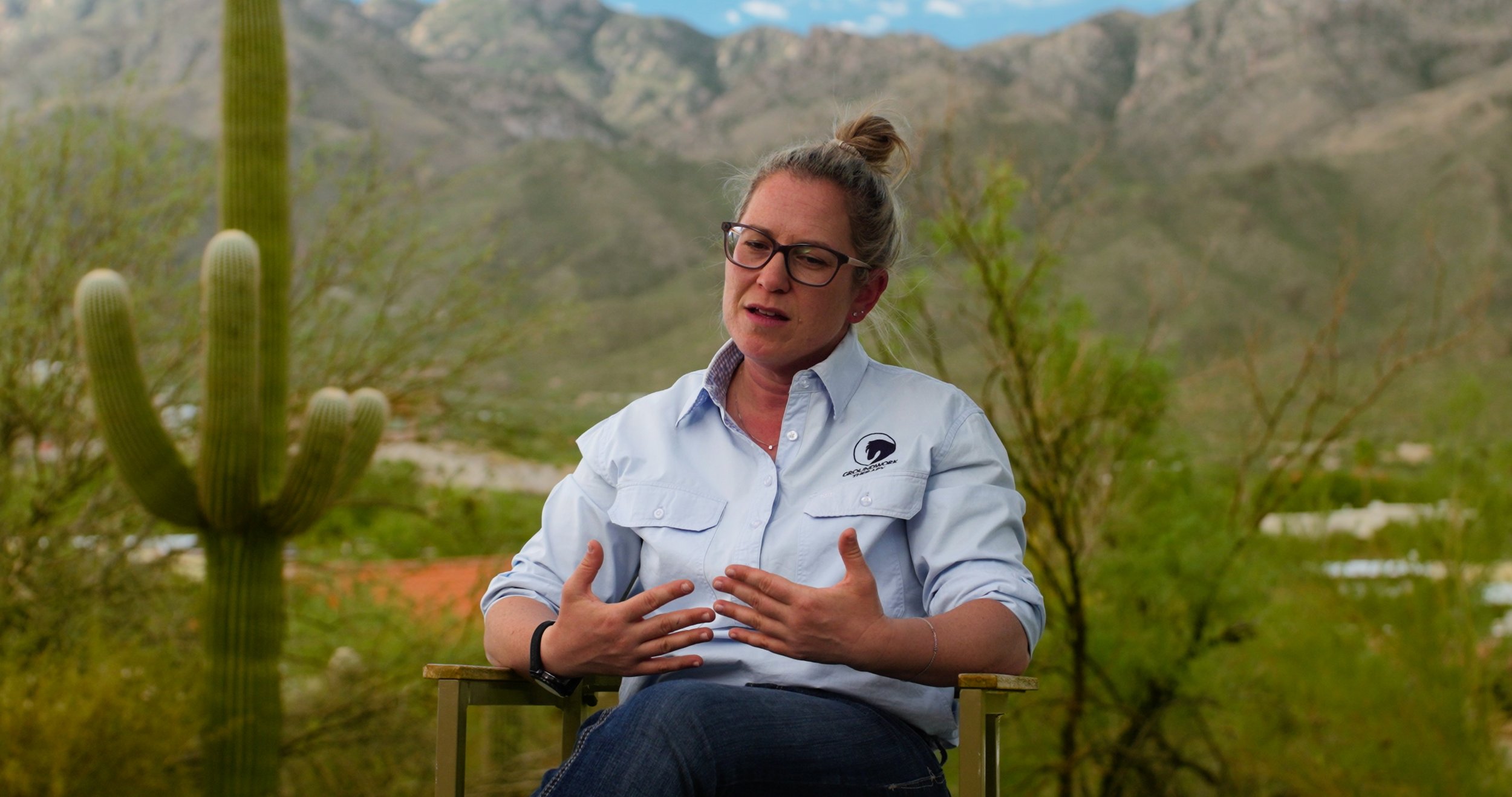
We shot the Groundwork Therapy documentary partly in Tucson and the combination of the equine facility environment, the surrounding desert, and the proximity to the Santa Catalina Mountains gave us a range we could not have found in the Valley.
Tucson also has its own film office and an active production community. Day rates for local crew in Tucson are generally lower than Phoenix which can matter on lower-budget productions.
Best for: documentary production, academic and research settings, nature and wildlife content, equine and agricultural subjects.
Flagstaff
Flagstaff sits two hours north of Phoenix at 7,000 feet and the visual contrast from the desert below is immediate and complete. Pine forest, mountain meadows, the San Francisco Peaks rising above the tree line, and a university town with its own distinct character.
The light in Flagstaff is different from the Valley. The elevation gives you cooler temperatures year-round and in fall the aspens turn in a way that most people do not associate with Arizona at all. Winter shoots with snow on the peaks and in the ponderosa pines are a completely different visual environment from anything in the Phoenix or Tucson metro.
The downtown Flagstaff area along Route 66 has a working railroad town character that reads authentically on camera. Northern Arizona University adds an academic setting. The surrounding national forest land is extensive and accessible with the right permits.
The Grand Canyon is 90 minutes from Flagstaff which makes it a natural base for productions that need both environments.
Best for: landscape documentary, nature content, seasonal shoots, Pacific Northwest feel without traveling to the Pacific Northwest, brand work needing dramatic elevation and forest environments.
The Grand Canyon
The Grand Canyon is one of the most filmed locations on earth and it is still genuinely difficult to capture on camera. The scale does not translate easily. You can spend a full day shooting the South Rim and come home with footage that does not communicate what it actually feels like to stand at the edge.
What does work: early morning before the crowds arrive, the side canyon perspectives from Mather Point and Yaki Point, the Colorado River from the canyon floor if you are doing a river expedition, and aerial coverage from legal flight corridors if you have the permits and the aircraft.
Commercial production inside Grand Canyon National Park requires a National Park Service commercial use permit and the approval process takes time. Do not plan a Grand Canyon shoot without building permit lead time into your schedule. The NPS is specific about what is allowed and where.
Helicopter and fixed-wing aerial tours operate under separate FAA and NPS authorizations. Drone operations inside the national park are prohibited without specific NPS approval which is rarely granted for commercial shoots.
Best for: documentary production at the largest scale, destination brand work, travel and tourism content, expedition coverage, any production that needs a genuinely world-class natural environment.
Lake Powell
Lake Powell sits on the Utah-Arizona border and it is one of the most visually unusual environments in the American West. The red sandstone canyon walls rise directly from the water surface and the combination of desert geology and a massive reservoir creates something that looks like no other place on earth.
For drone cinematography Lake Powell is exceptional. The aerial perspectives of the canyon arms, the houseboats, the slot canyons feeding into the main lake, and the surrounding Navajo Nation land give you visual material that is genuinely difficult to replicate anywhere else.
Access to Lake Powell for commercial shoots involves multiple jurisdictions. Glen Canyon National Recreation Area is managed by the NPS and requires commercial use permits. Some areas fall within the Navajo Nation which has its own permitting process. If you are shooting on the water you will typically need a boat and either a rental or local operator with access.
The Page, Arizona area serves as the base for most Lake Powell productions and has accommodations and logistics support for incoming crews.
Best for: aerial cinematography, landscape documentary, destination and travel brand work, adventure and expedition content, any production needing a visually surreal natural environment.
Cochise Stronghold
Deep in the Dragoon Mountains of southeastern Arizona sits Cochise Stronghold, the historic hideout of the Apache leader Cochise and one of the most compelling rock climbing destinations in the American Southwest. The granite formations here are world-class and the climbing community knows it. What the production world has not fully caught up to yet is how extraordinary this location looks on camera.
The Stronghold is a natural fortress. Massive granite boulders and canyon walls create a landscape that feels both ancient and cinematic. The rock is textured and warm-toned in a way that catches light beautifully at any time of day. The surrounding canyon gives you natural framing and depth that open desert locations cannot match.
For climbing content specifically, Cochise Stronghold is a mecca. The routes range from beginner accessible to serious technical climbing and the variety of wall angles, crack systems, and boulder problems gives a cinematographer a huge range of shot options within a relatively compact area. You are not hiking for hours to find the next angle. The visual opportunities are dense and accessible.
Beyond climbing, the historical weight of the location adds a documentary dimension that few Arizona locations can match. The story of Cochise and the Apache resistance is one of the most significant chapters in American Southwest history and it happened in this exact terrain. For documentary productions that want to combine landscape and history, the Stronghold is exceptional material.
The area is managed by Coronado National Forest and commercial shoots require a film permit from the forest service. The Cochise Stronghold campground and the surrounding canyon are accessible by road and the remoteness of the location means you are not competing with tourist crowds the way you would be at more well-known Arizona destinations.
Best for: rock climbing and outdoor brand content, adventure sports production, documentary work on American Southwest history, nature and landscape photography, any production needing dramatic granite terrain with depth and texture.
Tombstone and Bisbee
Southern Arizona has two towns that offer something the rest of the state does not: genuine historic character that has not been completely sanitized for tourism.
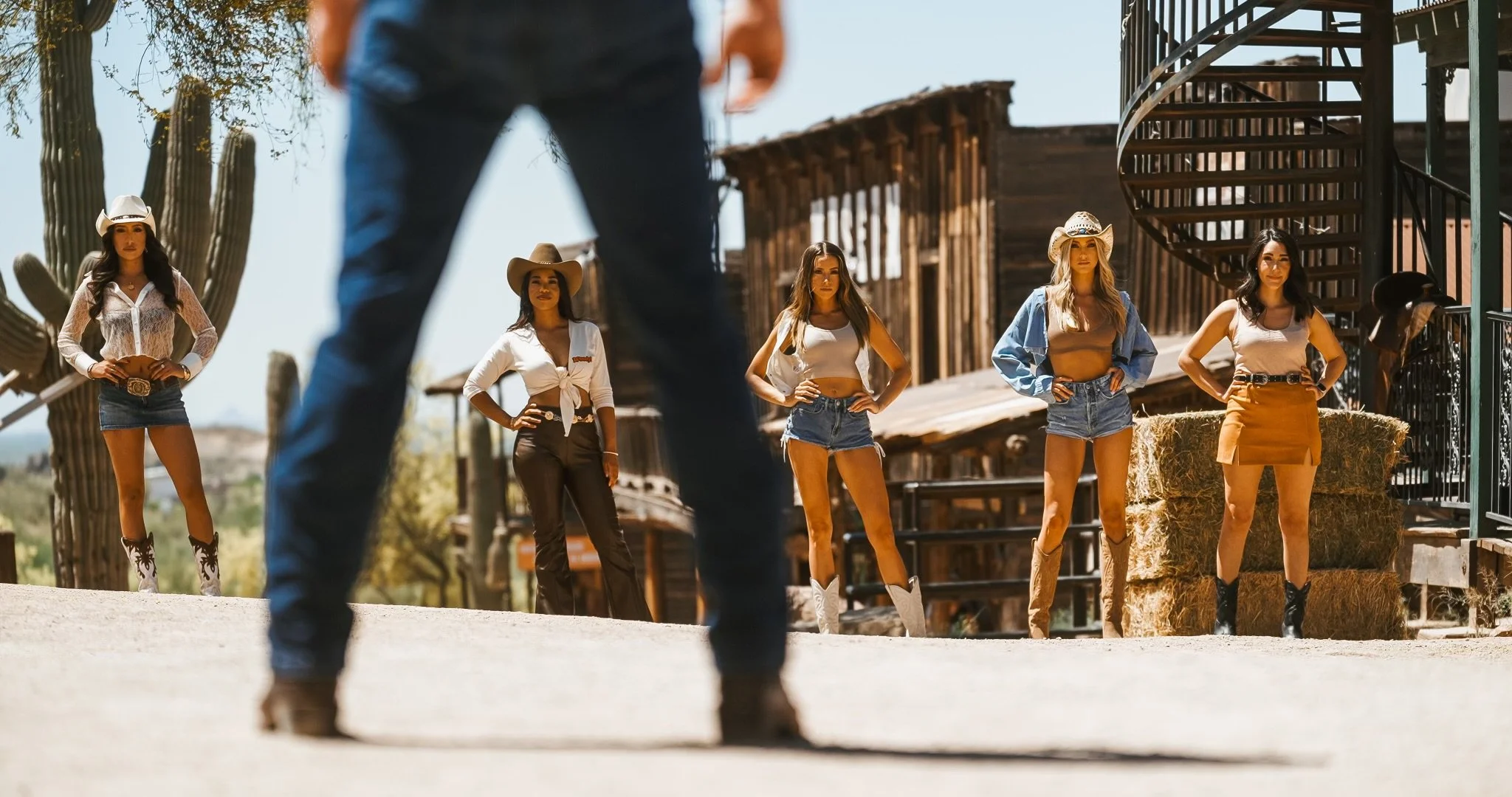
Tombstone is the more famous of the two. The OK Corral, Allen Street, the courthouse, and the surrounding desert landscape give you an 1880s western environment that has been preserved well enough to read authentically on camera. For period commercial work, western brand content, documentary productions about American history, and any shoot that needs a convincing frontier setting, Tombstone is the real thing.
Bisbee is different and in many ways more interesting for production work. The former copper mining town sits in a canyon in the Mule Mountains and has an architectural character unlike anything else in Arizona. Terraced streets, Victorian-era mine buildings, the massive Lavender Pit open pit mine, and a contemporary arts community that moved in as the mining industry declined. The visual range in Bisbee is remarkable and the town is accustomed to working with filmmakers.
Both towns are about 90 minutes southeast of Tucson. Commercial shoots in town typically involve coordination with local business owners and city or county permitting depending on the specific location. The surrounding Coronado National Memorial and the Huachuca Mountains add outdoor environments within easy range.
Best for: western and heritage brand content, period commercial production, documentary work on American history and culture, music videos, narrative productions needing authentic frontier or mining town environments.
Superstition Wilderness and Goldfield Ghost Town
The Superstition Mountains sit about 40 minutes east of Phoenix and they are one of the most visually dramatic locations in the entire state. The jagged volcanic peaks rise sharply from the desert floor and the light on them in the early morning and late afternoon is unlike anything else in the Valley. The range has a raw, unmistakable character on camera that reads as genuinely wild rather than curated desert.
At the base of the mountains sits Goldfield Ghost Town, a historic 1890s gold mining settlement that has been preserved and is open to productions. The combination of western architecture, dusty streets, mine equipment, and the Superstitions rising directly behind it gives you a location that very few places in the country can match. You can shoot a period-appropriate western environment in the foreground and have one of Arizona's most dramatic mountain ranges filling the background.
For documentary work, commercial content, music videos, and any brand narrative that needs a sense of history or scale, this combination is exceptional. The ghost town is privately operated which means location access is typically handled directly through the property rather than through municipal permitting. The surrounding Superstition Wilderness is managed by the Tonto National Forest and requires a commercial use permit for shoots on federal land.
Drone operations in the area are generally unrestricted from an airspace standpoint though Tonto National Forest has its own drone regulations for wilderness areas worth checking before you fly.
Best for: western and heritage brand content, documentary production, music videos, commercial work needing dramatic scale, action sports in rugged terrain, narrative productions needing period or wilderness environments.
What to Know Before You Shoot in Arizona
A few things that come up consistently when productions come to Arizona:
Permits are required almost everywhere for commercial shoots. Public parks, national forest land, BLM land, state land, and most municipal properties all have their own permitting processes. The Arizona Film Commission maintains a production guide and can help route you to the right contacts for most locations in the state.
Drone operations require a FAA Part 107 certification for commercial work. Many popular Arizona locations are in controlled airspace near Phoenix Sky Harbor, Scottsdale Airport, or other facilities. Always check airspace before flying.
Heat is a real production factor from May through September. Shooting in direct desert sun in July is physically demanding on crew and gear. Schedule shoots for early morning, build in shade breaks, and plan for shorter shoot days if you are working in full sun.
The Arizona MPPP tax credit program offers between 15 and 20 percent in refundable tax credits on qualified production expenses in the state. If you are coming from out of state for a larger production, talk to a local production partner about structuring your budget for eligibility before you lock the schedule.
Frequently Asked Questions
Do I need a permit to film in Arizona? For commercial video production, yes in almost all cases. Public parks, national forest, BLM land, and most municipal properties require permits. Private property requires landowner permission. The Arizona Film Commission is the best starting point for permit guidance across the state.
What is the best time of year to film in Arizona? October through April is the ideal production window for most exterior shoots. The light is warm, temperatures are comfortable, and the desert is visually sharp. Summer months (June through September) can be shot but require early morning scheduling and strong heat management protocols for crew and equipment.
Can I fly a drone commercially in Arizona? Yes with the right credentials. FAA Part 107 certification is required for all commercial drone operations. Many areas around Phoenix require additional airspace authorization through the FAA LAANC system. Sedona and areas near the Grand Canyon have specific restrictions worth checking before you schedule aerial days.
Does Arizona offer film production tax incentives? Yes. The Arizona Motion Picture Production Program offers refundable tax credits between 15 and 20 percent on qualified in-state production expenses. Pre-certification through the Arizona Commerce Authority is required before production begins.
Can Ragtown Media scout and secure locations for my Arizona production? Yes. We work with local location scouts and handle permitting coordination for productions coming into Phoenix, Scottsdale, Tucson, and across Arizona. Start a conversation at ragtownmedia.com/start-a-project.